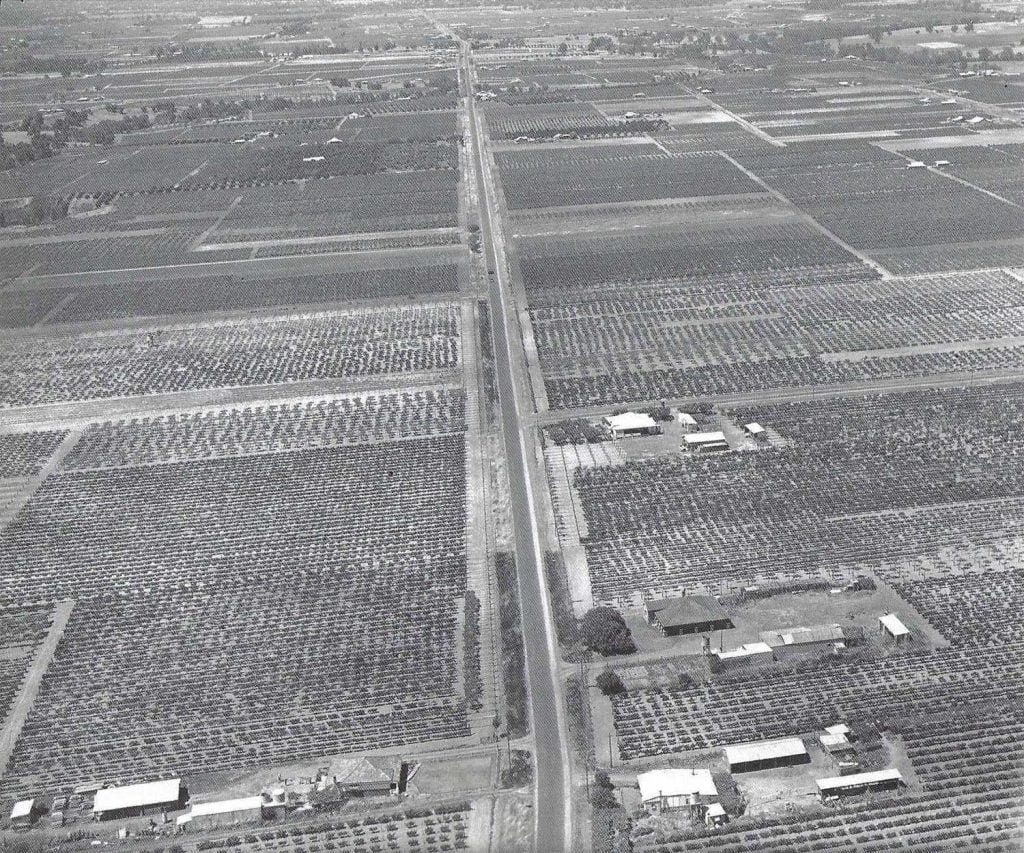
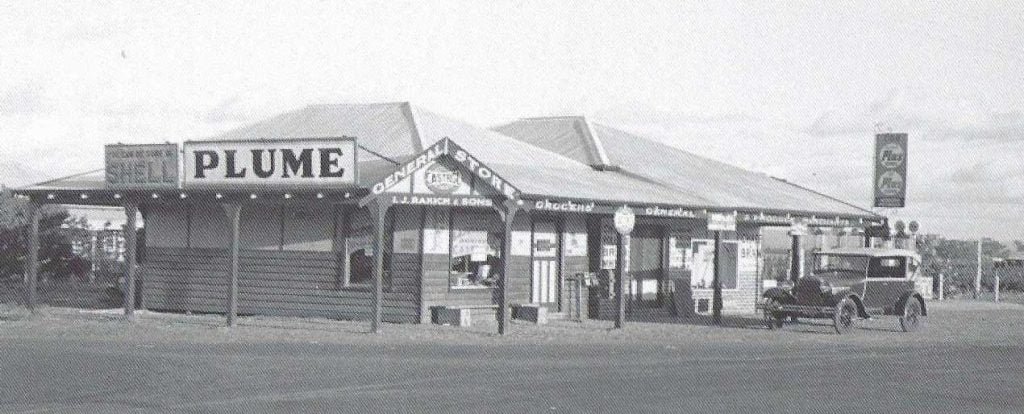
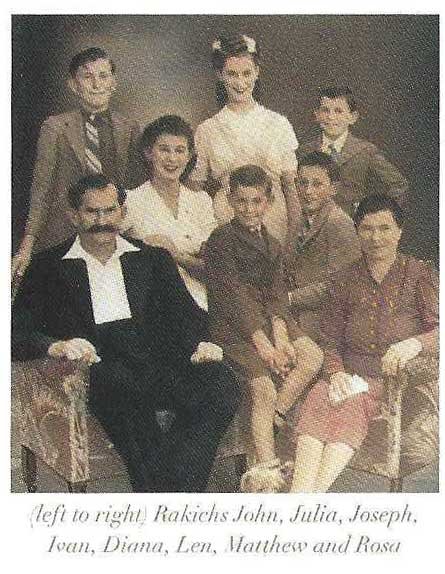
Another Croatian store, the first in the valley, about 4km along Great Northern Highway was run by Stanko and Drina Letica and their three daughters while Sons Joe and Stan worked the vines.
But originally, the family set up in Olive Road where they were ratepayers as early as 1916.
At first, Stanko who was one of the few to own a truck used their house as a base for continental goods Dalmatians liked to eat especially macaroni, cheese, anchovies and bakalar (dried fish).
The store and adjacent home on Great Northern Highway was established in 1932 and run initially by Drina despite her limited English until the girls were old enough.
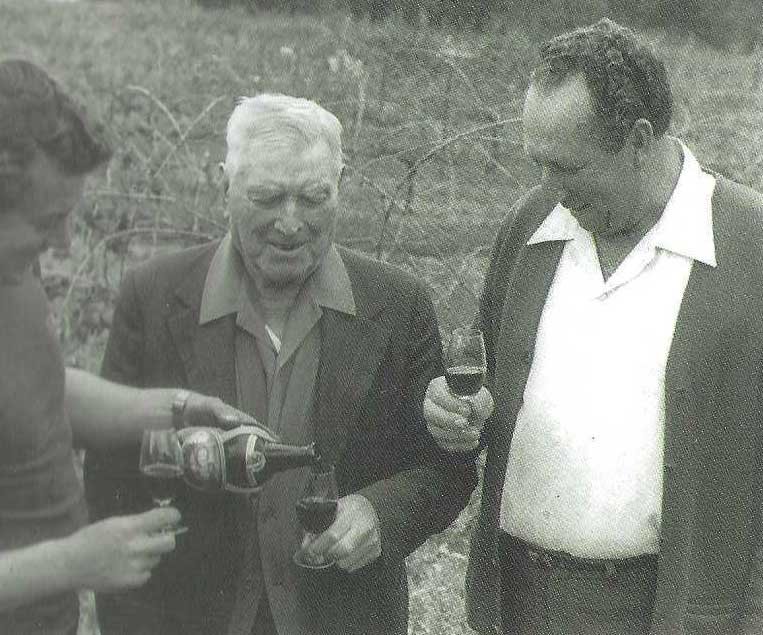
In time, the shop became a district focal point where, along with other locations such as at Kraljevichs and Sumichs, men gathered at weekends to play buce and cards, often for a glass of wine, the Letica production marketed as Ilira.
Initially however, to clear the land for their vines, they had to use explosives to blast big trees.
Part of the produce they sold included smoked goat and lamb meat.
End of vintage was party time when Drina would make prsurate and her husband would roast a lamb on the spit for all to enjoy.
A delicacy was kompet made from the residue of the crushed grapes after the wine was made. Added were spices and wholemeal flour.
To serve, it was cut in thin slices and consumed with the grape spirit rakija.
GROWING COMMUNITY
In their book To Make a Better Life, authors Ena Czeladka and Carolyn Polizzotto recorded that the growing Yugoslav community was a counterweight to the racial discrimination that existed among the Australian’s who boycotted the shop.
“All Southern Europeans were regarded as racially inferior to persons of British origin,” they said though acknowledging many kind acts by individual families.
“During the inter war years, the technique of mutual support which had been essential to bare survival on the Goldfields, could now serve to knit a community together or to help it prosper and make it grow.”
The authors also recorded that: “in the 1920s, when Australia stipulated that prospective immigrants needed to possess the sum of 40 pounds, a further financial obstacle was imposed, though the repeated use of the same 40 pounds passed around from hand to hand as needed among members of the Yugoslav community could alleviate the problem.”
At this time, men who were not Australian citizens were ineligible for government employment or for unemployment relief; and citizenship required five years residence in Australia, as well as a fee of five pounds.
For people earning two pounds a week for more than 100 hours’ work. five pounds was a substantial sum.
COOPER
In 1927, Stanko Letica drove the family truck to Fremanlte to meet the Ormonde on which he believed his sister to be travelling. She was not but he befriended Jack Hrabar, an 18-year-old who had no family in Western Australia. A job was organised in a dried fruit packaging shed but his skills as a cooper were soon in demand, gaining work with the major winemaker Valencia, with numerous small producers around the Valley and at New Norcia where the Benedictine Monks had established a vineyard and winery at Wyening.
Six years after arrival, he purchased a property at West Swan with a partner. Soon however, he took full control planting a range of varieties while maintaining his coopering activities.
The family lived in a small house using horse and cart for transport until they were able to afford a car. A favourite family outing was the pictures at Guildford. But one night when the car refused to start, “Jack harnessed the horse to the car pulling it around and around until it finally started and we got to the pictures,” said his wife Nellie.
The Bakranich family, also to be found on Great Northern Highway and who accordingly, chose the label Highway Wines, have been major fortified winemakers, basing 80 per cent of production on such styles.
So can be found almost at any time, about 40,000 litres quietly nestling in casks and storage tanks, maturing away before release.
Founder Tony Bakranich and son Velko, with strong family support established a sound customer base for these wines over the years, full bodied, smooth, sweet sons-of-the-Swan.
The biggest sellers were a vintage port, from ripe shiraz and grenache, and a big, rich, sweet liqueur port, from shiraz.
Other wines in the range include a liqueur and fortified muscat, tokay and sherries, sweet, medium sweet and dry, part of a list of 20 fortifieds that goes on and on.
Father and son are self-taught; experience and knowledge passed from one to the other based largely on trial and error.
As well, their prices are modest. The dearest wines are the rich, sweet, full bodied liqueur muscat and liqueur sherry, 1980 vintage wines packaged in 375ml bottles selling for $18 each. (2004 price).
The families have 10.5 hectares of vineyard, producing more than 100 tonnes of fruit a year.
An unexpected boost in 2000 came from a paddock at the rear of the winery, previously considered useless because it was too low lying and wet.
But $40,000 worth of filling resulted in a flourishing new vineyard with high hopes for fruit quality.
Three years after Tony Bakranich migrated to Western Australia in 1930 as a 16-year-old, he was looking to buy land in the Valley for his own vineyard. The first, in 1936, was a virgin bush block he cleared by hand. The second six years later was an existing vineyard. In 1945 the Highway property was purchased and the winery and cellar door sales established.
The first wines were made in 1954 in a small shed at the rear of the premises, bulk lines mostly delivered to Perth suburban customers. During these development days, Tony supplemented income by working at the Midland railway workshops and traded the other blocks for better land in the valley, to produce table grapes and citrus fruits as well as wine grapes.
Velko joined the business in 1960, taking over with wife Helen in 1990.
Of the bottled range, the liqueur port, a blend of various vintages some up to 15 years old, is the most popular. Made from ripe shiraz and cabernet sauvignon, it is big and full bodied, nothing wimpish about this Swan proudct.
Highway also makes a basic dry red and four light easy to drink styles, riesling, semillon, rose and moselle.
All the wines were sold at cellar door, a lot to passing farmers who call in to have containers often of 20 litres filled. The service provided by Helen, a girl from the suburbs and a former bank officer who admitted to knowing nothing about winemaking before marrying into the family. Now her tasks are vast and she ruefully recalls sore wrists from pruning and bogging in gum boots in winter.
Helping with winemaking in a cool winery seems pleasant in comparison.
MILKA
A near neighbour is Milka Borich who arrived in Western Australia in 1937 to join her husband.
At the age of 90, she was still tending the one hectare vineyard she had planted more than 50 years previously at her Middle Swan property on Great Northern Highway.
As well, there was a big vegetable garden to tend and big house to clean.
But her small vineyard was only a fraction of what she tended on much bigger properties the family had owned.
In her liftetime, she has thrived on hard work and adversity, the great grandmother believing she could still outlast many of her much younger offspring on a very hot day among the vines.
When she arrived from Croatia at Fremantle on August 18, 1837 with her one-year-old daughter Mary, her waiting husband Ante told her they were off to Perth to buy a new house.
He later emerged from the old Boans department store in the city carrying a big roped parcel.
It was a tent, their home in the bush at Red Hill in the Darling Ranges for the next 2 ½ years where she also helped him cut sleepers during the day even when pregnant with their second child.
At night she cooked in a kerosene tin set on rocks over a fire and then undertook other domestic chores like washing clothes at night or on Sundays.
Milka recalled being terrified when lost one night on her way back to the tent as rain began to fall with darkness setting in.
She stumbled across a tin shed and the startled owner realised what happened by the only two words of English she knew: “no camp, no camp.”
He led her by lantern light back just as her worried husband was about to seek help.
Milka moved on to live in a shed with her expanding family on their first Swan vineyard before finally, moving into their first home, after 15 years, on another Swan Valley property.
While Ante worked off the property, she did the work of a man, in jobs like harnessing horses to cultivate and lumping a heavy container of liquid when spending a day spraying for grapevine disease control.
Then there was pruning and picking, the growing of cash crops like peas and melons between the vines, the milking of goats and caring for about 100 chooks.
During this time, Milka would be “baby sitting” her children, left to play near where she worked. This was a world apart from the seasickness endured on the rough seas during the long voyage to Australia, the fear of an unknown land and the tears at the tent.
Milka’s mother had died when she was three and life under two stepmothers had not been easy.
Schooling was spasmodic, when there were no chores. There was none at all after the age of ten.
In Western Australia she made cheese and baked bread and washed clothes by hand in a trough under the vines and carted water from a well. But she said it was a life of progress.
Daughter Nancy believes the hard work was her mother’s motivation.
“She is content among the vines and seeing the grapes ripen.”
For four years, Peter Stanich also lived in a tent. After arriving in WA in 1926 at the age of 15, he and his brother Ante who had pre-ceded him by two years, cleared land in the bush for five shillings an acre with all the meat they could eat — and nothing else.
Peter moved on, to become a sleeper cutter in the forests of the State’s South West.
Later he recalled standing among the giant trees with axe in hand that he had “come to some sort of hell” compared to the tranquil family village in Brac with its peaceful outlook over a small bay that he had fished so often and yearned for so much.
In 1937, Peter purchased a seven hectare Swan Valley property with an orange orchard and some vines, later expanded for table grape production for export and the domestic market.
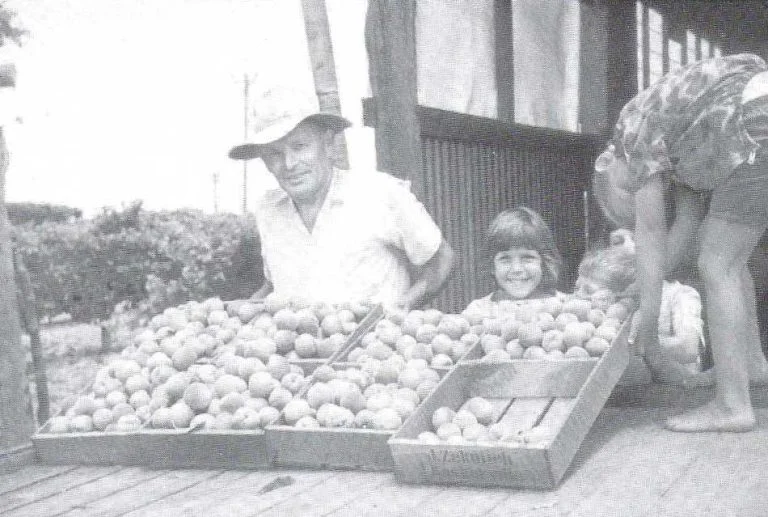
Other income sources were developed with a new truck for contract carting, and a sawmill to make trays to market peaches and boxes for oranges and grapes.
With near-neighbour Peter Talijancich, he travelled to the hills to fell and cut logs, body strength applied through a cross-cut saw and to load much of the timber.
Such was his trust in his business dealings, that Peter never used a docket book.
Many strainers and posts were cut at the mill for the local vineyards.
Others to work at the mill included Tony Dundo, Joe Babich, Peter Matijasevich, Mick Perich and Frank Kovacevich.
Having trucks also meant a major role in the Valley’s social life, the vehicles often used as the transport to dances and other functions.
Gruelling work in the South West forests cutting railway sleepers and bridge timbers was also crucial to Ante Cobanov enabling him to pioneer the family Stock Road Herne Hill vineyard.
From humble beginnings when only a few hundred gallons were made, it developed into a strong business with deliveries of mainly bulk wines around the suburbs for more than half a century to long established customers.
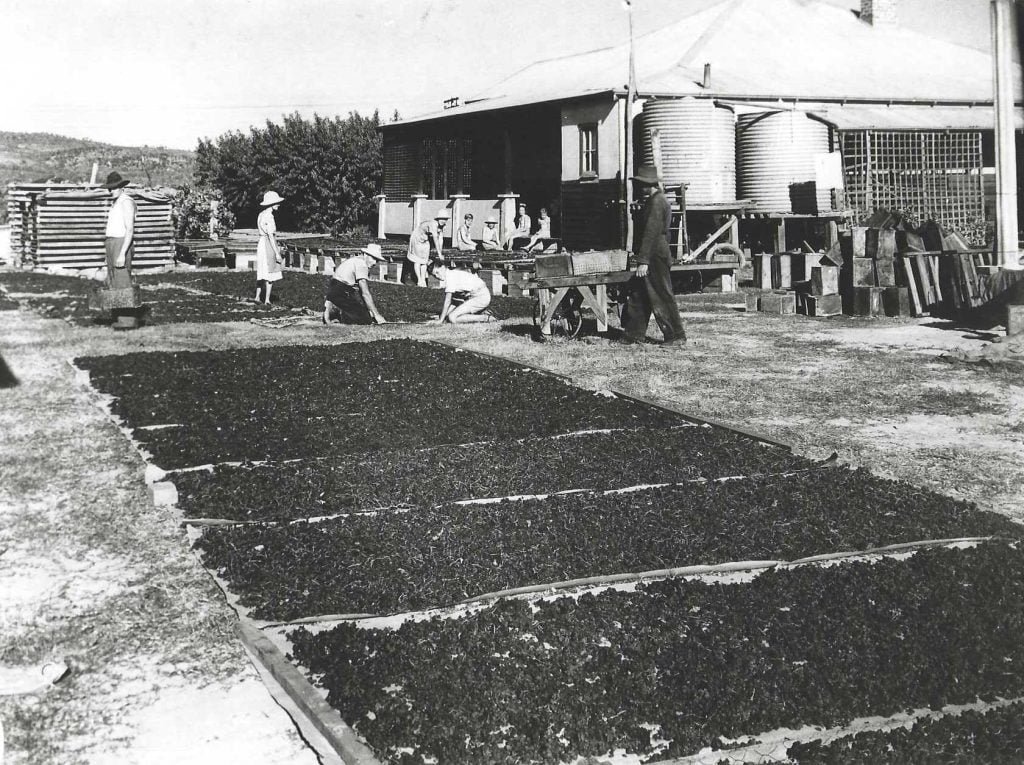
Initially, most of the vineyard was geared to dried fruit. However, wine volumes soon increased. Within a few years, an annual production of more than 13,000 litres was being achieved. Most was dry table wine with a lot railed to country clients.
Third generation Tony managed 21 hectares on two blocks made up of varieties including chardonnay, chenin blanc, verdelho, sauvignon blanc, pedro, cabernet sauvignon, shiraz, merlot and grenache marketing under the label, Windy Creek.
For a time, fruit for wine making was also produced on a Bindoon vineyard that had been purchased but the emphasis was then switched totally to the Swan.
A boilermaker-welder by trade, Tony Cobanov returned to the Valley in the early 1980s, growing watermelons initially on vacant family land next to his father Steve’s vineyard. Then he planted a few chenin blanc vines, next some chardonnay. “It just kept growing and growing from there,” he said.
Tony developed the business to about a third in bottles with wines like the unwooded, dry, fruity and grassy sauvignon blanc and cabernet merlot, a soft, round, ripe red, as well as an eight-year-old port and a slightly sweet light tawny.
Fruit for the ports is picked after everything else is finished, usually in April, to achieve maximum ripeness. Sometimes, the grapes for the eight-year-old port that are picked last are slightly raisiny, with low juice yield. However, the name (eight year old port) suggested by a relative, is not the wine’s age. It is a blend of four varieties taken from a range of years.
WATER
For water to his Swan Valley home, Jakov (Jim) Ozich would harness his horse to pull a sled carrying a loaded 44 gallon drum from a soak well up a slope to the family house. If the horse went too quickly, most of the water was lost.
What an ordeal! Catch and harness the horse, pull up the water in a bucket from the well transfer it to the 44 gallon drum and try and get the horse to go uphill without losing any of the precious supply.
Jim, who owned several properties from 1939 and started, making wine in 1947, bought a truck five years later, to sell his wines.
Production was increased to 4500 litres in 1960 but at various times, he also focused on dried fruit and fresh table grapes.
But Croatian wine and vine sustained interests went well beyond the Swan.
In 1933, the Banovich brothers, Jure and Jakov, bought 200 hectares in Toodyay with small areas of sultanas and currants planted by the previous owner.
The Banovich’s cleared and planted vines to expand the vineyard to 16 hectares.
In 1935, they also purchased 13ha of vacant land on Great Eastern Highway Belmont, a few kilometres from the centre of Perth, to produce table grapes and make wine. They sold out in 1946.
Franko Andrijich, who had worked for the Banovich’s, bought the Toodyay property in 1935 and continued to work on the vineyard.
In 1936 Franko’s daughter Marija (aged 15) arrived and took on the role of housekeeper and vineyard worker. She was later to marry Ante Bakranich and they started up Highway Wines in the Swan Valley.
But on her arrival at Toodyay, she protested the small hessian house was more like a stable.
When she leant on a wall it shook such that she shouted: “Boze moj, ovo je potres.” (My God, it’s an earthquake).
Language was a terrible problem for many of the migrants. When Marija went to the shop in Toodyay, she was mocked for her English speaking efforts. Such was her humiliation; she wished
“her boat had sunk” before arriving in WA.
From 1953 Franko’s son Branko took over the property until 1968, when drought took its toll and the vines were removed.
Alongside this property a cousin also named Franko Andrijich purchased 280ha in 1935. He had 16 hectares of dried fruit and at this time was said to have been the largest dried fruit grower in WA.
Others settled in places like Wanneroo, Maddington and Orange Grove where Wally Radojkovich established Jadran Wines in
Reservoir Road, 20km South East of Perth in l927 and the winery in l929.
Wally was just thirteen years old when sent from the family village to live and find employment in Western Australia’s Swan Valley. He worked hard and saved every penny he could with one aim in mind, to buy his own land and to grow grapes. In just two years he had accumulated enough to buy, with a partner, four hectares of virgin land at Orange Grove on sloping land less than a kilometre from the foothills.
A cousin living in nearby Maddington and other fellow migrants, who had planted orchards and vines in the district, had attracted him to the area. The pattern of hard work continued with clearing by hand at weekends, and before and after other jobs. By 1932 he was able to buy out his partner and produce his own wine.
Many years later, in 1975, wines made by Orange Grove ended the domination by Olive Farm of the Perth Wine Show’s most successful small winemaker trophy.
In all, the winery’s entries received eight gold and two silver medals, an impressive performance for a producer who had only begun showing two years previously. For years after Jadran did not show again. “We felt we had made our point about the quality of the wines we can produce,” Wally’s son winemaker and principal Stephen said.
“We decided to concentrate on making wines our customers wanted, rather than putting effort into show wines.”
Over the years, the emphasis of production from the nine hectare Jadran vineyard has been on bulk table wines and fortifieds but later emphasis has seen an increase in bottled premium wine to about a third of the production.
A feature of the property is the four magnificent flame trees, landmark of Jadran where visitors enjoy tasting the range.
The vineyard is not a big producer, yielding only about six tonnes to the hectare from the sandy loam soils over clay.
The production means that most of the fruit for the crush is purchased from other districts, especially the Swan Valley and Great Southern.
Six of the eight gold medals awarded to Jadran in 1975 were for fortified wines reflecting the quality of such styles.
Stephen took over from his father in l974 with son Paul employed in the business. One of the lesser-known varieties they handle is sercial, also known as ondenc, and Irvine’s white, grown mostly in South Australia and Victoria where it has been particularly successful in the Great Western area for sparkling wine production.
Jadran also has a bubbly in its range, a spumante, plus marsala, muscat, vermouth and sherries to meet all tastes. “Our aim is to cater for every visitor making the trip to Orange Grove,” Stephen said.
Another Orange Grove vineyard was established by Frano Piskilich who left home in 1906 for Africa to live and work with an uncle. He moved on to Sydney and then New Zealand to become a gum digger, only to be interned on an island in Wellington harbour during World War 1 because of his Austrian status. Then, after hostilities had ended, he was sent home. In 1926, after working in France, he travelled to Fremantle, to be followed five years later by his wife and two sons, purchasing six hectares of uncleared land in Orange Grove in 1932.
He also developed the property part time, clearing by hand while using explosives to blast tree stumps. Income was generated with part time work in the Goldfields.
Ultimately, in 1935, he was able to plant his vineyard, to produce table grapes, dried fruit and wine, enough it was said, “to give you a headache.”
Along the property boundary flowed the Bickley Brook and it also had a natural spring. Water was carted to the house by Mrs (Marija) Piskilich in two kerosene tins on a yoke and pole, a journey of about 200 metres.
“But we were well fed and had lots of fun,” recalled a daughter.
In the 1930s the family sold its unbranded wines for a “bob a bottle.”
During his time as a miner, Frano was awarded a bravery medal by the Chamber of Mines for saving a workmate. He had cut his hands to pieces in pulling a cable from a higher level to hoist the man to safety but refused to accept the award. He considered saving a life was sufficient reward.
In the late 1950s, he travelled to WA’s Pilbara region to dig holes for manganese samples. Later, in Perth, he sought work through the Commonwealth Employment Service. Instead, he was told to apply for the aged pension.
LUCKVILLE WINES
Nearby, in Albany Highway Gosnells, Mijo Borich established Luckville Wines in 1939. During World War 11, it was especially popular with American servicemen stationed in Western Australia who became regular visitors.
The business was purchased by Joze Maras in 1953, the 2.5 hectare property then known as Lakeville yielding from four to seven tonnes producing up to 4000 litres of wine from grenache, shiraz, and muscat.
For 50 years, the family have sent their wines around the State and have sold at the cellar door, the adjacent Albany Highway being slightly diverted to preserve the historic winery which proudly carries the sign: “Wine produced and sold here, try before you buy.”
Wine industry historian Ian Boersma enjoyed making trips to the winery just to be served by Joze’s wife Milica who also provided eggs from her free range fowls, garlic, Dalmatinski kupus (cabbage) and tomatoes from her vegetable garden to special customers as well as table grapes.
A practice from her homeland is boiling up scraps mixed with pollard and bran for her fowls leading one visitor to comment: “They are the best looking chooks I have ever seen. Their feathers glow with good health.”
When a fire destroyed a timber yard in Wellington Street, Perth that Mate Pecar operated with Jim Talijancich, he turned to the land buying four hectares at Maddington to clear and set up Range View vineyard.
Wines were sold at the door, some 18,000 litres of claret that fetched $1.60 for a flagon in the 1960s and 70c for a bottle.
Income for the family which included five daughters was supplemented by growing broad beans, peas, swedes and turnips for the Perth market before the property was sold in 1969.
A few kilometres further south at Byford, Paval Vlasich who arrived in WA in 1930 managed eight years later to buy four hectares.
Initially he cleared the land by hand, also using gelignite to remove troublesome tree stumps.
The first vintage of his Sunrays wine was in 1948 with a winery established from discarded bricks while unwanted railway steel held barrels in place.
The production of 20,000-30,000 gallons was charged out at a shilling a bottle and two shillings, for premium wine.
Increased wine sales led to the purchase of
muscat planted at the Whitby Falls Coach House property at Mundijong, owned from 1933 to 1940 by Victor Silich. As well as this variety Silich’s also grew currants, table grapes, melons, vegetables and fruit. Often the returns from market sales were not enough to pay the carrier and market expenses.
A spring-cart loaded with their prime produce, picked in the early morning and taken to Mundijong, would yield but twenty five shillings for a long
day’s toil.
As a result, home comforts were sparse.
Washed potato hessian bags for example, were used as blankets.
At least they were never hungry, their hard work providing plenty of produce to eat.
Records reveal that social life was “non existent” apart from the odd dance at the local road board hall and the occasional football game.
Silich Court in Mundijong was named after the family.
TRAGEDY Jack Kunisich also sought to make his mark at Byford but alas, his efforts ended in tragedy.
In 1939, he established six hectare of grenache and shiraz and also ran cattle on his 40 hectare block.
But in a terrible accident, the bachelor was killed by his own bull, he had reared from birth.
Meanwhile, at Osborne Park, Josip Rodin, who purchased a property of seven hectares in 1928 where he established a large cellar, was granted a licence to sell his products in 1937.
By 1946, he was marketing almost 100,000 litres a year of mainly sweet wine to the United Kingdom.
Called Hillside Vineyard, the wines won prizes for their quality. In one shipment to the UK 30,000 litres were exported. Production ended in 1964. The property is now a valued housing estate.
WANNEROO
The pioneering vineyard of Peter Parin who in 1921, with brother Roko purchased 20 hectares of crown land. A further 23 hectares was added two years later. In 1929, the brothers split with Peter who had worked in railway construction gangs, sawmilling, wheat harvesting and wheat lumping, developing a major vineyard and wine cellar. It was the district’s first commercial venture using limestone from an old Church of England school building on another two hectare property he had bought.
More stone was used for the cellar excavated by horse and scoop. Timber cut from bush sources and trimmed with a broad axe was used in the construction.
Behind the cellar, two concrete vats were built to ferment the wine, the grapes processed by a specially geared two-wheeled hand crusher that revolved copper blades at high speed.
Grape spirit purchased from the Swan Valley with the approval and supervision of a Customs officer necessary for all fortified manufacture was added for fortification.
A hand-dug 5.5 metre well provided for the family and, without a refrigerator, acted as a cool storage facility. A watermelon for example, would be put into a bucket and lowered into the well.
The property was given the name Peter’s Vineyard. A humorous twist was a notice that read “free wine tomorrow” but of course, tomorrow never came.
Less humorous however, was the need for Peter and his brother Roko who had travelled to Australia with Austrian passports as a result of the occupation of the time, to report weekly to police.
In its time, before the vineyard gave way to progress in 1956-57, it sold bottles of claret and muscat for a shilling each and “Italian style” liqueur vermouth for five shillings.
Fortified wines were extremely popular during World War 11.
AMERICANS
Great Northern Highway in the Swan Valley was a busy route for military convoys pouring north.
Servicemen would jump off their vehicles to grab grapes or buy wine.
Fortunately for some of us, they had no idea of the Australian currency of the time, pounds, shillings and pence.
So if they would stop to buy a billycan of mushrooms in season for example, they would ask how much.
We quickly learnt not to give a specific price and out would come a handful of change, much more than the three or six pence we may have had in mind.
“Say kid is that enough,” they would say, pouring coins into our sweaty palms.
While younger men from the Swan went to war, most older men stayed on the land, providing food for the nation.
Some went into the Homeguard for family protection in case of attack while at our schools; trenches were dug in the playground by our fathers in case the invading Japanese headed south from their bombing missions in the north of Australia.
The end of the great conflict led to lifestyle improvements, the celebrations of Christmas and New Year’s Eve extremely popular with men travelling around the district in trucks to wish friends and relatives well, sharing a drink or some delicacies prepared by the women who stayed at home, such as hrostule and fritule.
A drink many enjoyed at special times was rakija. Like the Italian grapa, it was an illegal product, usually made in homemade stills.
The government kept strict controls on such products requiring release from bond stores for use in fortified wine making. They feared if freely available, the rakija could be added to drinks in milk bars enticing young girls into areas of disrepute.
But in the Croatian culture, the high-powered drink was enjoyed regularly on cold nights, and even used to rub on rheumatic joints. In their own countries such production was freely allowed, and the new settlers found it hard to understand the restrictions which prevented them from making a bottle or so for their own pleasure.
Heavy fines were imposed for people caught trading the products and many a still was said to have been dumped in abandoned Swan Valley wells, as owners feared the consequences of being caught.
In the 1950s and 60s, governments paid big sums for leads on anyone producing rakija or grapa.
CHANGE During this time, the Swan was at a critical stage, the vineyards starting to sag with declining yields due to nematode problems. So the Croatians brought their grafting skills into play using resistant rootstock as their base resource.
In the cool of the early morning when the sap flowed best, men could be seen on their knees binding up their latest graft with plastic tape or wool.
In an article headed The Dalmatian Green Graft, the Western Australian journal of Agriculture of October 1968 said that training of the grafted vine to the trellis wire was possible within a few weeks.
About this time, Jack Mann’s son Dorham who had married Sally Rakich, daughter of a Baskerville vineyard family, was playing a key role in helping the small Valley winemakers move to the production of quality table wines.
An extension officer with the Agriculture Department, he advised on new technology and techniques with the move of emphasis away from fortified and bulk wines to table wines.
The numerous changes were also reflected in the improvements to lifestyle.
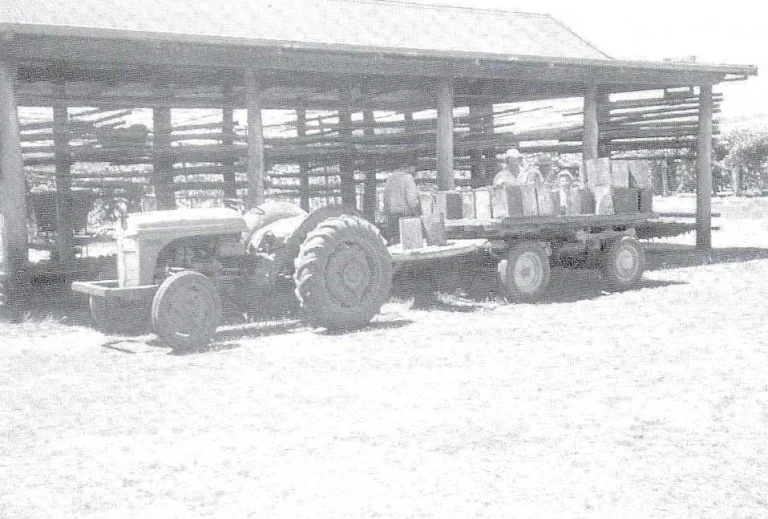
While the hard work never stopped, there was more time for fun, especially with tractors taking over from horses and the steady increase in vehicle purchases.
Drinking at the numerous Valley dances by the Swan boys however, was moderate, sharing the odd big brown bottle of beer outside the increasing number of dances.
A popular venue was the Herne Hill hall. A former army drill hall from Kalgoorlie, dating from World War 1, it was dismantled and transported by rail in 1924 to a site near the Herne Hill primary school.
Together, Australians old and new re-built the facility to become a place of concerts, wedding receptions, sporting club dinners, picture shows and a venue for meetings as well as the dances.
In addition, a Catholic priest would celebrate mass until St Michael’s church was built on Great Northern Highway in 1935.
For their part, the young girls attending Valley dances, stayed inside, supervised the whole night by their mothers who sat around the hall watching closely who danced with their daughters, looking for any indication of interest that may lead to marriage.
Supper was provided as part of the entry, usually trays of sandwiches and cakes with big pots of tea, catered for by the women. These were extremely sociable family affairs with young children pulling each other around the polished wooden floors, sharpened by candle wax or corn flaks, in between the dancing.
Many couples met at such places or at weddings or were discreetly pushed towards each other by keen parents.
Some had never been out with their partners on their own, before marriage.
Many of their mothers, as recorded earlier, had come to Western Australia following their husbands much earlier immigration, waiting at home with their children until money could provide for their passage.
Some however, extremely apprehensive about the lonely move to the other side of the world, were brought out to marry men they had never met often linked together by a relative or friend through a photograph.
PICNICS and SPORT Another important social area was regular picnics. Half the Swan for example, would be at South Beach near Fremantle on Boxing Day. There men would play buce, the children swim and the women socialise.
At the Jedinstvo Club in the Swan, another feature at the many dances were lambs roasted on spits, treats for all.
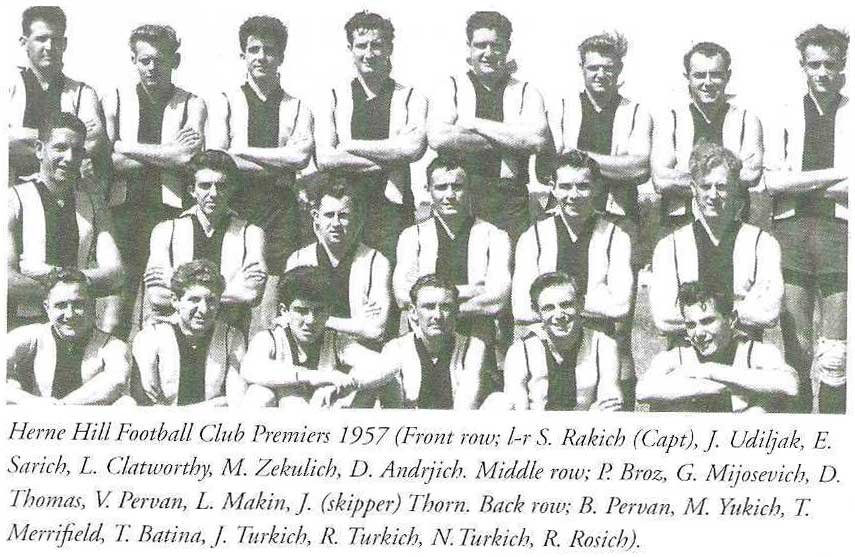
The main sport for girls was netball while soccer at the neighbouring Swan Athletic and Swan Valley clubs became key parts of sporting interest in the State as both clubs proudly competed at first division level. The Herne Hill Football Club later to become part of Swan Athletic and based on many Croatian players won numerous premierships in competitions in the Hills and South Midlands.
Cricket in the summer was keenly contested by teams on both sides of the river but summer grape picking could play havoc with players available to take part.
Forming the clubs often involved major family contributions.
Women for example would cater for fund raising afternoon teas, suppers and dinners requiring the donation of the inevitable plate.
It was not a matter however, of outdoing anybody with some super cake creation, rather a contribution to the betterment of the community and so their own lives.
MODERN LABEL
A modern valley label, Oakover Estate, has a rich history. Nikola Yukich who arrived in WA in 1923 aged 16 and would have walked home had he been able, purchased a two hectare Swan Valley block seven years later. With wife Danica who he married in 1934, two years after her arrival in the State, they began developing table grape production for sale at home and later, abroad.
Sons Norm and Mark expanded with further land purchases until they went their own ways in 1996. Then Mark with sons Graeme and Kim rapidly developed other land holdings to establish major wine grape vineyards and the Oakover Estate winery and restaurant next to historic Houghton, the biggest wine producer in Western Australia. Purchased by Yukich’s and renamed Nikola Estate after the family’s founder.
In a few short years, the Yukichs were producing almost 2000 tonnes of grapes, making the family one of the State’s biggest.
A major share of their winery’s processing was for other producers, made under contract.
The past has also been the future for Lovreta brothers Jim and Tony.
Their father Stipan, who arrived in WA in 1927, spent five years’ sleeper cutting in the South West with cousins Matt and Joe Beros. Pooling their resources, they purchased a 25 hectare property at West Swan, producing dried fruit, table grapes, wine and citrus.
A few years later, they branched out on their own.
Stipan Lovreta moved to a 13ha Caversham property where by horse and hand, he laboured to rid the vines and fruit trees from beds of couch grass, a curse to production.
Jim recalled later: “During the war years, he was able to trade the wines he made for tyres, batteries and other badly needed vehicle parts. He told us this saved him.”
While others sold their land and returned to Croatia after the war to help rebuild their battered homeland, Stipan instead left his cousin Vic Beros to tend his land.
A year later, he returned bringing out wife Karme in 1951, developing his vineyard to focus on fresh table grape exports.
But Jim and Tony decided instead to target the domestic market, building a production of 30,000 10kg boxes a year in direct sales to the major supermarket chain Coles where they had become a preferred supplier.
To avoid losing market share to earlier ripening northern crops, they built an 18,000 square metre hot house, one of the biggest in Australia.
For fruit shelf life improvement in the stores, they developed systems to place fruit packed among the grape vines, into cool storage within 30 minutes of being harvested.
They also introduced new trellising systems and trickle irrigation and fertilising regimes while significantly increasing their vineyard areas.
Like others in the Valley, they realised the need to be flexible, changing varieties to meet changing consumer demands, especially the big swing to seedless varieties.
“We have been prepared to take risks,” said Jim.
“That has been our path to progress.”
When the Katich family left their village of Kozica for Australia in 1955, Cedo then just four was sat on a white horse led by his Aunty for the start of the long journey. Immediately they joined relatives Mate and Zorka Miocevich at Caversham where they all lived for 12 months in a tiny two bedroom house.
A former shoe maker, family head Milenko gained employment at the Midland Railway Workshops in the tarpaulin shop allowing for the purchase of a vineyard at Caversham where his wife Mila and the children provided much of the necessary labour. Further purchases extended their land holdings, with clearing by hand for table grape and dried fruit production.
Cedo and his brother Matt became fulltime in the early 1970s when the operation was totally focussed on table grapes.
“With fresh grapes, you have to be flexible, to change quickly and give consumers what they want,” Cedo said.
“That means seedless grapes without tough skins and attractive colours. This is critical otherwise you end up with fruit you cannot sell or that achieves poor prices.
“But labour has been a problem especially with the old pioneers passing on.
“With continually rising costs, you have to be efficient to survive.”
By 2004, Katichs were tending 25 hectares producing about 300 tonnes, a size that made the family a major WA player.
Ned Erceg, whose family was among the 1960s wave of migrants was forced to cut short academic studies to look after the family’s Swan Valley 4.5 hectare vineyard following the death of his father.
Under his enterprising management and marketing skills, property ownership was significantly expanded to include more vineyards and a South West orchard at Donnybrook.
Urged on by a university friend who had become a buyer for a supermarket chain, Ned took up the challenge in the early 1980s to supply grapes and fruit.
Such was the success that he soon moved to take in quality-accredited crops from many growers throughout the State to distribute mainly from his Swan packing shed and cool room centre.
By the early 1990s, Ned had become a preferred supplier to the major national retailers Woolworths and Coles, achieving Australia-wide sales.
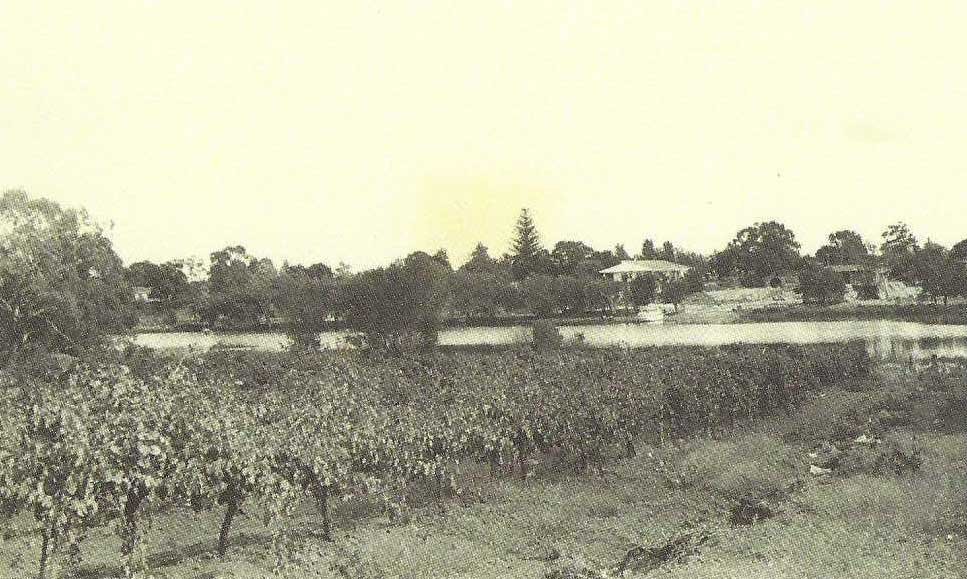
Mick Erceg was just five when he arrived in WA in 1959, a year after his father Josip (Joze). With community backing for they had little money, the family purchased a six hectare riverfront vineyard at Caversham, mostly planted with currants for dried fruit production.
Dermatitis in 1961 put Joze out of work for 14 months, stressing the family.
But a determination to survive saw them overcome the setback with various alternative crops until 1972, when Mick quit a bank job to become a fulltime vigneron, with brother Ilija.
By this time, they owned a second vineyard, at West Swan and had leased another growing grapes on 14 hectares, a sizeable venture. During the decade they also replanted with exciting new varieties especially seedless and by the late 1980s, production had increased from 6000 10kg boxes to 15,000,
mostly for export.
As well, to improve returns, they invested in cool storage in 1978 as well as marketing direct to remote mining areas and Darwin in the Northern Territory.
In 20 years, the Ercegs who continued to expand, had become a Swan Valley table grape leader as well as setting new horizons for packaging and presentation of their fruit. CARNARVON
In addition, they became a significant force in harvest changes to improve efficiencies, wholesale marketing and in motivating grape production at Carnarvon, to a major horticultural industry.
Modern day pioneers at Carnarvon 1000km north of Perth include the Durmanich family who planted their first table grapes in 1995.
The eight hectares of red globe dawn and flame varieties covered by nets to protect them from the wind and birds, yield an average of 150 tonnes of fruit a year.
The earlier ripening grapes from the warmer region to the later maturing crops from southern vineyards, has meant premium prices on the Perth market where the fruit is sold over a period of about two months from November.
The Durmanichs have been at Carnarvon since 1964.
Backpackers play a key role in the production and so does the Swan Valley with a team of flying Croatian pruners including experienced vignerons like Joe Rakich, John Ozich, John Bozich and Len Radalj making the long trip to the town on the Gascoyne River for the annual task.
“Dalmatia is, so as to speak, made for the vine and the vine is made for Dalmatia.
“There is no survival for us without wine.”
Rudolf Kraljevic, 1893.

Leave a Comment